
Laboratories
Stainless steel 304 vs 316: the lab and pharma guide
Published 5 min read
Both grades are austenitic stainless steels and look the same on the bench. The difference that matters is invisible: 316 contains molybdenum, and that changes how it behaves around chlorides.
Here is how to choose without over-specifying, and without under-specifying where it counts.
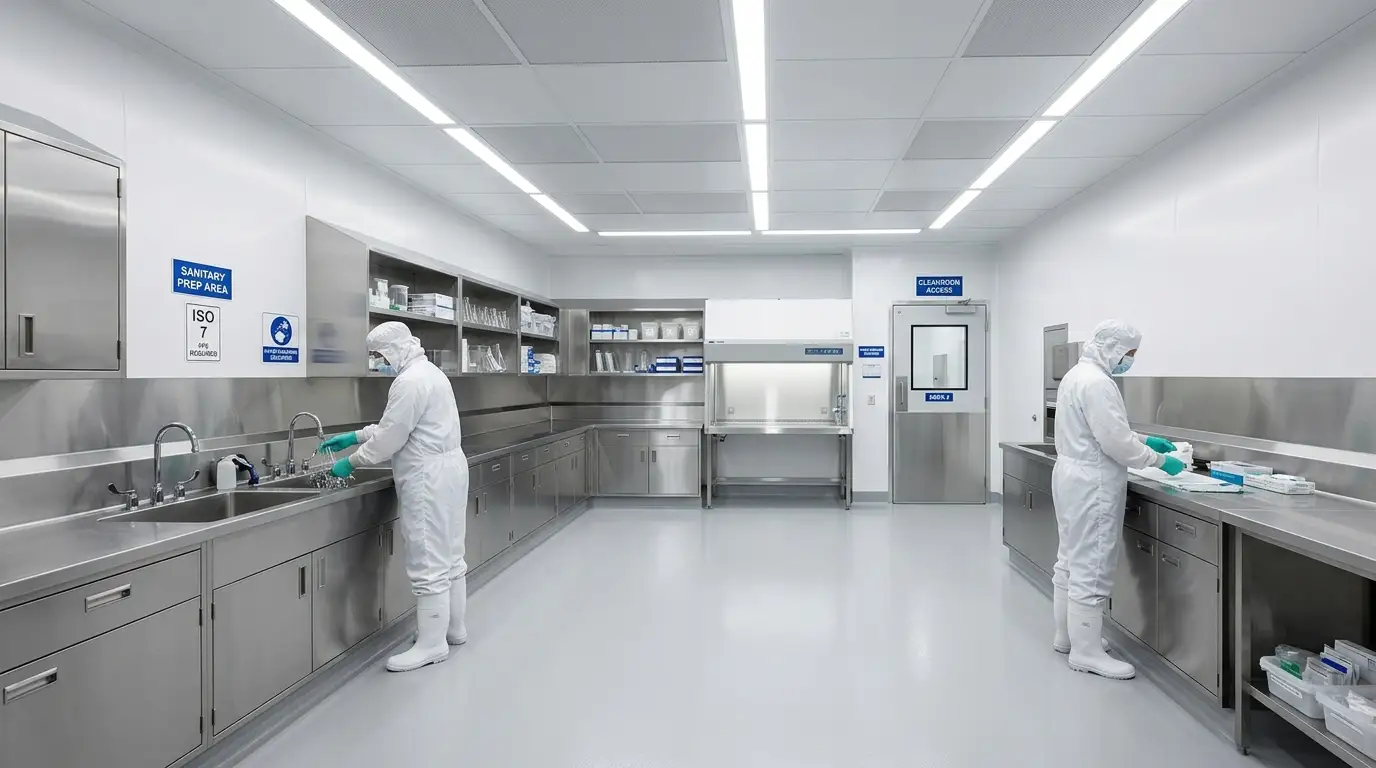
The grades
| Grade | What sets it apart | Use |
|---|---|---|
| 304 | Chromium-nickel steel, no molybdenum | General laboratory use: benches, sinks, cabinetry, cladding |
| 316 | Adds about 2 to 3 percent molybdenum for better resistance to pitting and crevice corrosion in chloride environments | Where chlorides, saline or aggressive cleaning agents are present |
| 316L | Low-carbon 316 (carbon below 0.03 percent), which resists sensitisation after welding | Welded pharma vessels, tanks and process areas |
Neither grade is antibacterial by itself: a smooth surface is what limits bacterial attachment.
Why molybdenum matters
Stainless steel protects itself with a thin passive oxide layer. Chlorides, found in salt, saline and many disinfectants, attack that layer and cause pitting. Molybdenum strengthens the layer, so 316 tolerates higher chloride levels and temperatures before pitting starts than 304.
The gap is real but not infinite. Even 316L can pit if chloride-based cleaners are left to dry on the surface, so rinse after sanitising and follow the manufacturer’s cleaning guidance.
Finishes
| Finish | Look | Typical use |
|---|---|---|
| No. 4 brushed | Directional satin grain | Cabinetry, counters, cladding |
| 2B | Smooth, soft reflection | Fabricated tanks and work tables |
| BA / No. 8 mirror | Highly reflective | Feature walls |
| Electropolished | Ultra-smooth, chromium-rich, Ra ≤ 0.38 µm (ASME BPE SF4) | Pharma vessels, tables, process areas |
A simple rule of thumb
Dry labs, general benches
304 is usually enough.
Wet areas with saline or bleach-type cleaners
Choose 316.
Welded pharma equipment and process areas
Choose 316L, often with an electropolished finish.
Frequently asked questions
Is 316 worth the extra cost?
It costs more than 304, so use it where chlorides or aggressive cleaners are present and save 304 for the rest. Specifying 316 everywhere is rarely necessary.
What does the “L” mean?
It marks the low-carbon version. Lower carbon reduces carbide formation during welding, which protects corrosion resistance in welded parts.
Does finish affect hygiene?
Yes. A smoother surface gives bacteria less to hold on to, which is why electropolished finishes are used in pharma process areas.
More insights
Related
Let's build your next space.
Tell us about your project and we will reply within two working days.